
Chiropractic Adjustment in San Diego, Planned Around Your Exam
A chiropractic adjustment in San Diego at True Chiropractic begins with an assessment of your history, current concerns, movement and goals. Your doctor uses those findings to discuss whether hands-on care fits your situation and how the visit can be adapted for your comfort. For active professionals, parents and people who train, the conversation includes the work, exercise and family activities that matter to you.
Where: Available at our Kearny Mesa office.

How your exam guides a spinal adjustment
A chiropractic adjustment is a hands-on service in which a doctor applies a controlled movement to a selected joint. The specific area, position and approach should follow what the doctor learns from your history and exam. At your first visit, the team listens to your concerns, routines, goals and questions, completes an exam and takes X-rays if the doctor determines they are needed. The doctor then reviews the findings, options and costs with you.
This assessment matters because the same complaint can affect people differently. A chiropractic adjustment in San Diego should still be planned for the individual in front of the doctor. A stiff neck after desk work, discomfort during training or a change in how you move through a busy day does not automatically call for the same approach. Tell the doctor when the concern began, what makes it better or worse, what you have tried and which activities you want to handle more comfortably. Also share relevant health history and any concern you have about positioning or pressure.
True Chiropractic describes its philosophy as whole-person care that considers the nervous system, structure, joints, muscles, movement and lifestyle together. That perspective helps frame a conversation about chiropractic care in San Diego without assuming that one technique or schedule suits everyone. The goal of the visit is to make a recommendation tied to your findings and priorities, then reassess if care continues.
During the adjustment, your doctor can explain the position being used and check in about comfort. A popping sound may occur as a joint moves, but the sound does not establish whether the adjustment changed symptoms or function. What you notice afterward can also vary. Some people report a temporary change in how an area feels; others notice little right away. Follow the guidance given for your situation. For a nonurgent unexpected or lasting concern, contact the office. Call 911 or seek emergency care for sudden weakness or inability to move, new loss of bladder or bowel control, trouble speaking, seeing or walking, chest pain, trouble breathing, a sudden severe headache, or symptoms after a serious head, neck or back injury.
Your work, training and family schedule can be part of planning, too. If you lift, run, sit for long periods, travel often or carry children, describe those demands rather than reducing your goal to a generic request to “move better.” That context helps the doctor discuss practical next steps and gives you a clearer way to judge whether the plan is addressing what brought you in.
Six other services to consider with the team
An adjustment is one of seven services at True Chiropractic San Diego. Your assessment and goals can help you ask whether another service belongs in the conversation.
- Laser therapy: an in-office, non-invasive service the team can discuss when it is relevant to your situation.
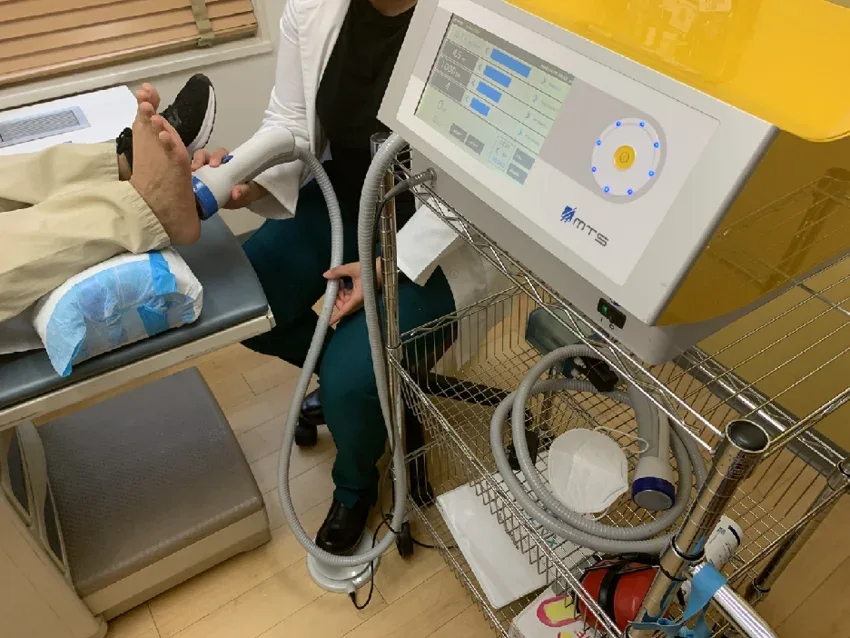
- SoftWave therapy: a technology-based service with its own evaluation process and a separate introductory offer.
- Weight management: support for goals related to weight and the daily habits that shape your plan.
- Hyperbaric oxygen therapy: sessions provided in the office’s HBOT equipment after the team reviews whether the service fits.
- PEMF therapy: an in-office pulsed electromagnetic field service that can be considered separately from hands-on care.
- Stretch therapy: one-on-one assisted stretching provided by the practice’s stretch therapist; new stretch clients have a separate evaluation and phone-booking process.
Ask what each service involves, why it is being considered and how the team would evaluate your response. You can also ask whether the adjustment alone is the clearest place to begin.

Laser therapy
Discuss light therapy and screening.
SoftWave therapy
An evaluation before acoustic-wave treatment.

Weight management
Discuss food, movement and daily habits.

Hyperbaric oxygen therapy
Ask about the chamber and suitability.

PEMF therapy
Explore a device-based option after screening.

Stretch therapy
Guided stretching around your movement goals.
Office Hours
Common questions
What happens during a chiropractic adjustment?
Your doctor positions the area being addressed and applies a controlled movement to a selected joint. The location and approach should be based on your history, exam findings and comfort. Ask the doctor to explain what they plan to do before the adjustment begins.
Will an adjustment hurt?
Comfort varies by person, area and approach. Tell your doctor about pain, sensitivity or concern before and during the visit so positioning and pressure can be discussed. Do not feel that you need to stay quiet if something feels wrong.
Why do joints sometimes make a popping sound?
A sound can occur as a joint moves during an adjustment. It is not required, and its presence or absence should not be treated as proof of a result. Your findings and response over time are more useful topics to review with the doctor.
How many adjustment visits will I need?
There is no fixed number for every person. A recommendation should depend on your exam findings, goals and response. Ask how often the doctor plans to reassess and what would lead to changing or ending the plan.
Are X‑rays required before an adjustment?
No. The practice’s new-patient offer includes X-rays if needed, which means they are not automatic for every visit. The doctor decides whether they are appropriate after reviewing your situation.
What should I expect after a chiropractic adjustment?
Your experience may differ from someone else’s, so use the guidance given for your findings rather than a generic routine. Ask about work, exercise or other plans if they matter that day. Contact the office if you have an unexpected or lasting concern.